The Biggest Mistake New Skateboarders Make (It Isn't Their Ollie)
Opening
The first time I saw a kid land a clean kickflip before he could even ride down a mellow bank, I knew exactly what was going to happen.
Three tries later, he clipped the nose, stepped off, picked his board up, and walked back to the same bit of flat. Kickflip. Kickflip. Kickflip.
He could flip the board.
He couldn't skate it.
I still see it now. Someone turns up at a skatepark, spends two hours trying ollies, lands one that looks half decent, then goes home feeling like they've made progress.
Most haven't.
You don't need a better ollie. You need better board control.
After 13 years of skating, I've noticed one thing separates people who improve quickly from the people who stay stuck for months.
It isn't talent.
It isn't expensive equipment.
It's how comfortable they are just riding their skateboard.
One thing I agree with Mitchie Brusco from Skate IQ on is that beginners rush into tricks far too early. Build board control first and everything else becomes easier.
What does good board control actually look like?
Forget kickflips for a minute.
Ask yourself if you can comfortably:
Push without staring at your feet.
Carve smooth turns in both directions.
Kick turn on command.
Ride off a kerb without panicking.
Manual for even one second.
Stop confidently without jumping off.
If two or three of those feel difficult, that's your starting point.
Not another hundred ollie attempts.
The mistake I see all the time
Last time I was at my local skatepark, one lad spent nearly an hour trying ollies.
Between every attempt he had to reset his feet before pushing again.
He wasn't practising ollies.
He was practising standing still.
Rolling board control teaches timing, balance and confidence all at once. Standing still teaches almost none of them.
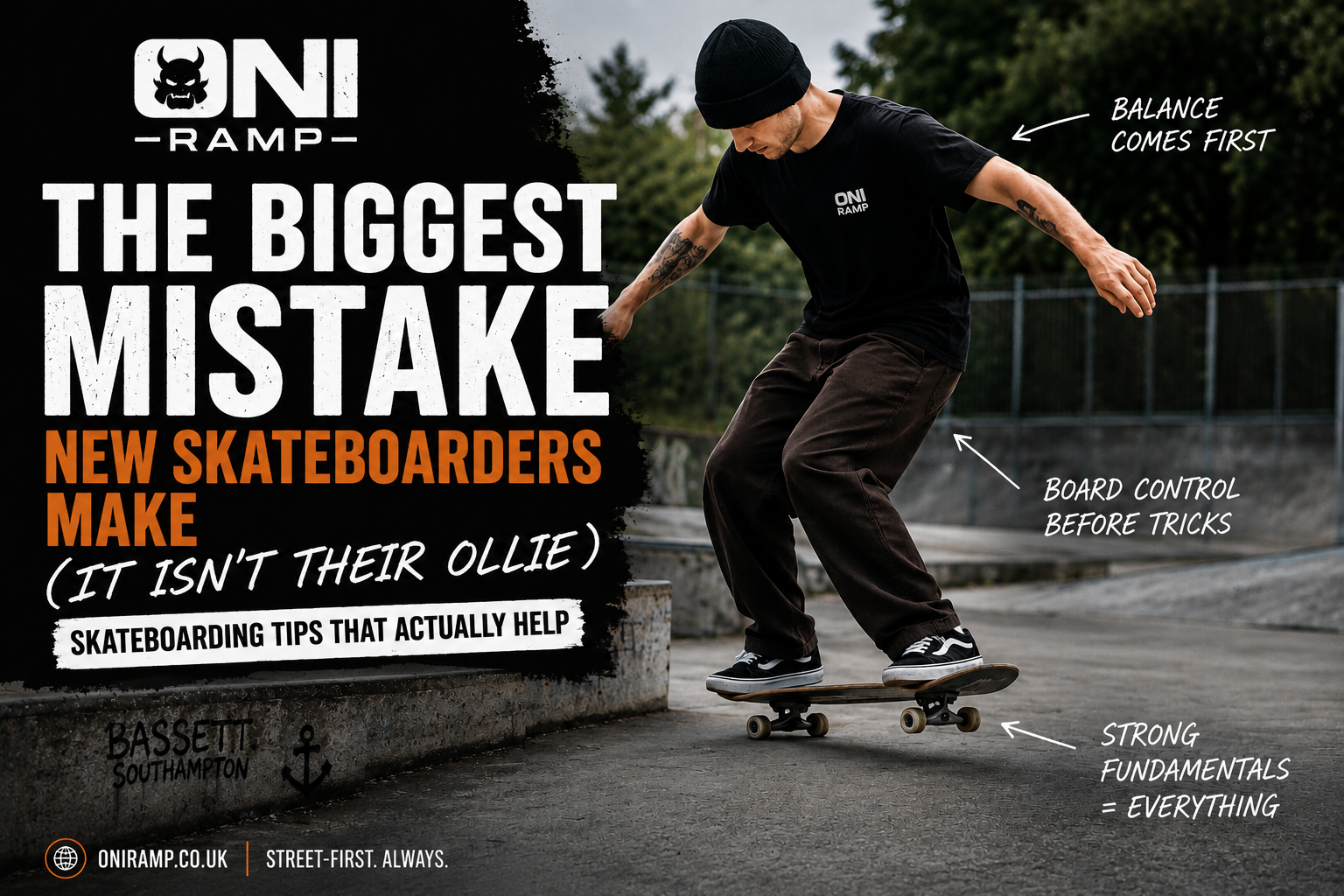
Skateboarder working on board control before learning ollies
Why manuals change everything
Manuals don't just teach balance.
They teach tiny weight adjustments.
Every ollie.
Every kickflip.
Every 180.
Every grind.
Every landing.
All of them rely on those same little movements.
That's why so many experienced skaters still practise manuals years later.
A session that will make you better
Instead of spending an hour trying one trick, split your session.
10 minutes
Ride. Push. Carve. Ride switch for a few metres.
10 minutes
Manual practice. Don't worry about distance. Just learn where the balance point is.
10 minutes
Kick turns, reverts and rolling off small kerbs.
Only then move on to ollies.
You'll probably land fewer tricks that day.
You'll learn more.
Skate IQ's beginner programme follows a similar progression by dedicating the first stage to balance, board feel and manual technique before moving on to ollies and kickflips.
Don't compare yourself to Instagram
Social media makes skateboarding look backwards.
You see the kickflip.
You don't see the hundreds of hours someone spent just riding around car parks.
I've watched mates spend six months chasing one trick while another skater quietly learnt to pump transitions, ride banks and carve bowls.
A year later, the second skater could learn almost anything because they trusted their board.
One exercise I wish I'd started sooner
Find a quiet bit of smooth ground.
Set a timer for 15 minutes.
Don't try a single trick.
Just ride.
Turn tightly.
Ride one-footed for a couple of pushes.
Manual for a second.
Ride faster than feels comfortable.
Slow down again.
Get used to the board moving underneath you instead of fighting it.
It sounds boring.
It isn't.
It's where confidence comes from.
Final thoughts
Anyone can learn a trick.
The skaters who keep progressing are the ones who fall in love with riding the board first.
Everything else grows from there.